


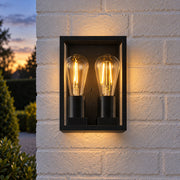
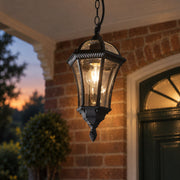


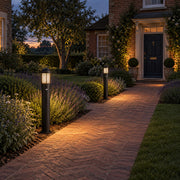
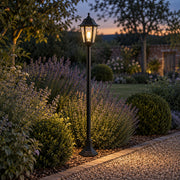

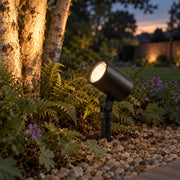


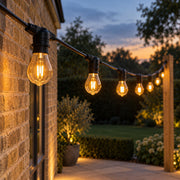

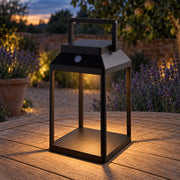


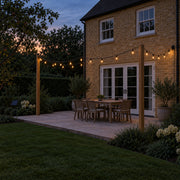


Warm white? Cool white?
Light colour is measured in kelvin. A lower number is warmer and more golden, a higher number is cooler and crisper. Here is how to choose for outdoors.
Two lights with the same brightness can feel completely different, and the reason is colour temperature. It is measured in kelvin (K), it is printed on every bulb box, and it is listed on our product pages.
The kelvin scale
The lower the number, the warmer and more golden the light. The higher the number, the cooler and bluer it looks.
Which colour for which job?
2700K
The most relaxed light. Kind to brick, stone, timber and faces.
3000K
A little crisper while staying warm. The safe all-round choice for the outside of a home.
4000K
Clearer for seeing detail. Suits modern render, grey paving and security lighting.
Daylight white, 6000K and above, is the coolest option. It can look stark against a house at night, so it is usually kept for security and task lighting.
Keep it consistent
Mixed colours are what make a scheme look accidental. Choose one colour temperature for everything you can see from one spot, especially fittings on the same wall. If you want contrast, change the brightness or the direction of the light, not its colour.
Colour is not brightness
Kelvin tells you the colour of the light. Lumens (lm) tell you how much light there is. As a rough guide for outdoors:
| Use | Typical output |
|---|---|
| Marker and accent lights | Up to 200 lm |
| Path and step lights | 100 to 400 lm |
| Wall lights by a door | 300 to 900 lm |
| Floodlights and security lights | 1,000 lm and above |
Outdoors, less is usually more. Your eyes adjust to the dark, so a modest light looks brighter than it would indoors.
Integrated LED or bulbs?
Some fittings have the LED built in, so the colour is fixed, or chosen when the light is installed. Others take bulbs, which lets you pick the colour and change it later. Each product page says which, and the Light Lab on the page shows the effect.
Let the finder narrow it down.
Three questions about your space, and a starting selection of lights that fit.